Neurosurgery • children and adults
Care that helps you navigate each stage.
From the first conversation and assessment, through shared decisions and ongoing care—with time for questions and clear explanations at every step.
An illustrative adult patient journey—an AI-assisted dramatization that does not depict a real patient case. It is not a promise of treatment or outcome. The care pathway, team and place of treatment may differ.
Surgery is one possible pathway and is considered only when medically justified.
Approach to conversation
Know what is happening now. Understand what may come next.
Every clinical situation is different. This page organises information about possible stages of care; the actual pathway depends on the patient’s needs, clinical assessment and shared decisions.
Knowledge hub
Understand the condition before discussing treatment.
Concise, sourced explanations for patients and families. No symptom checker, self-diagnosis or assumption that an imaging result means surgery is required.
Hydrocephalus
What abnormal cerebrospinal-fluid build-up means and how assessment may proceed.
Brain and spinal canal tumours
Why the type, location and symptoms of a lesion can lead to different care plans.
Glioma
How imaging, tissue and molecular findings support an individual neuro-oncology plan.
Vascular neurosurgery
Why aneurysms, AVMs, fistulas and other vascular conditions need different risk assessments and pathways.
Chiari malformation type I
What an MRI finding may mean, when it may cause no symptoms and why decisions are individual.
Lumbar disc and nerve-root symptoms
How symptoms, neurological examination and imaging are considered together—without assuming surgery is required.
Cervical disc disease and myelopathy
How to separate a disc finding, C6 nerve-root symptoms and spinal-cord dysfunction—even when myelopathy causes little or no pain.
Head injury
Which information helps assess an injury and where to find verified warning signs.
Patient journey
From assessment to ongoing care
This is an illustrative care framework, not a promise of how care will proceed.
- 01
Understanding the situation
A conversation, available information and questions that help clarify the starting point.
- 02
Decision and time for questions
A discussion of possible pathways and the time needed to make an informed decision.
- 03
Procedure—when indicated
Surgery is considered only when it may be medically justified. Its purpose, preparation and alternatives require a separate discussion.
- 04
Team-based care
Depending on the situation, the next steps may involve different professionals and specialties.
- 05
Postoperative care
After surgery, the patient is monitored and the care plan is updated as needs change.
- 06
Discharge and guidance
Clarifying what is needed after returning home and when to seek help.
- 07
Outpatient follow-up
Returning to the conversation, reviewing ongoing needs and planning the next step together.
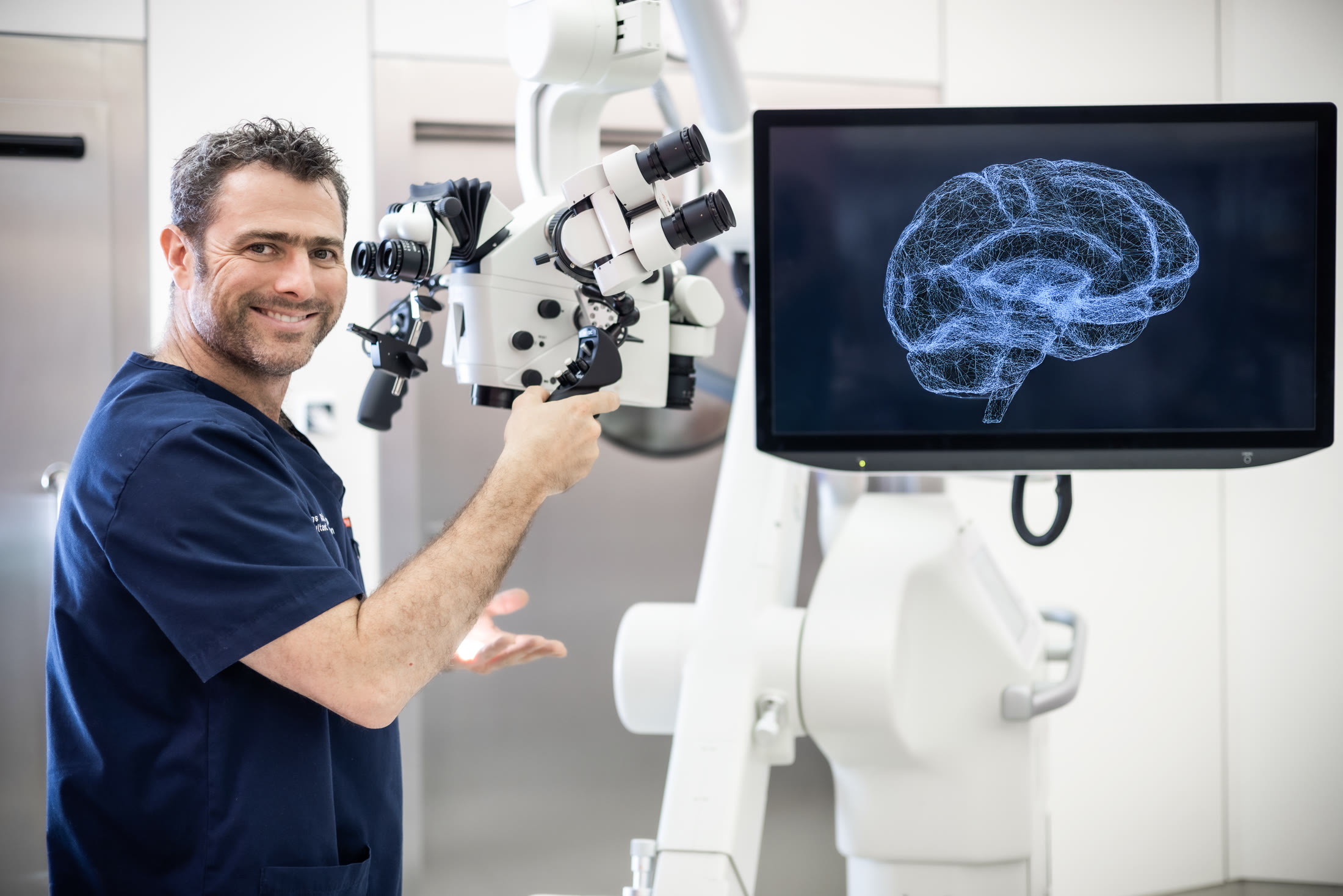
Professional information
Lucas Rákász
Neurosurgeon. Information about areas of practice, qualifications, training and professional work is presented in separate, verifiable sections of the website.
- Poland
- NIL • PWZ 2164627
- United Kingdom
- GMC 7044938